Published on June 23, 2026
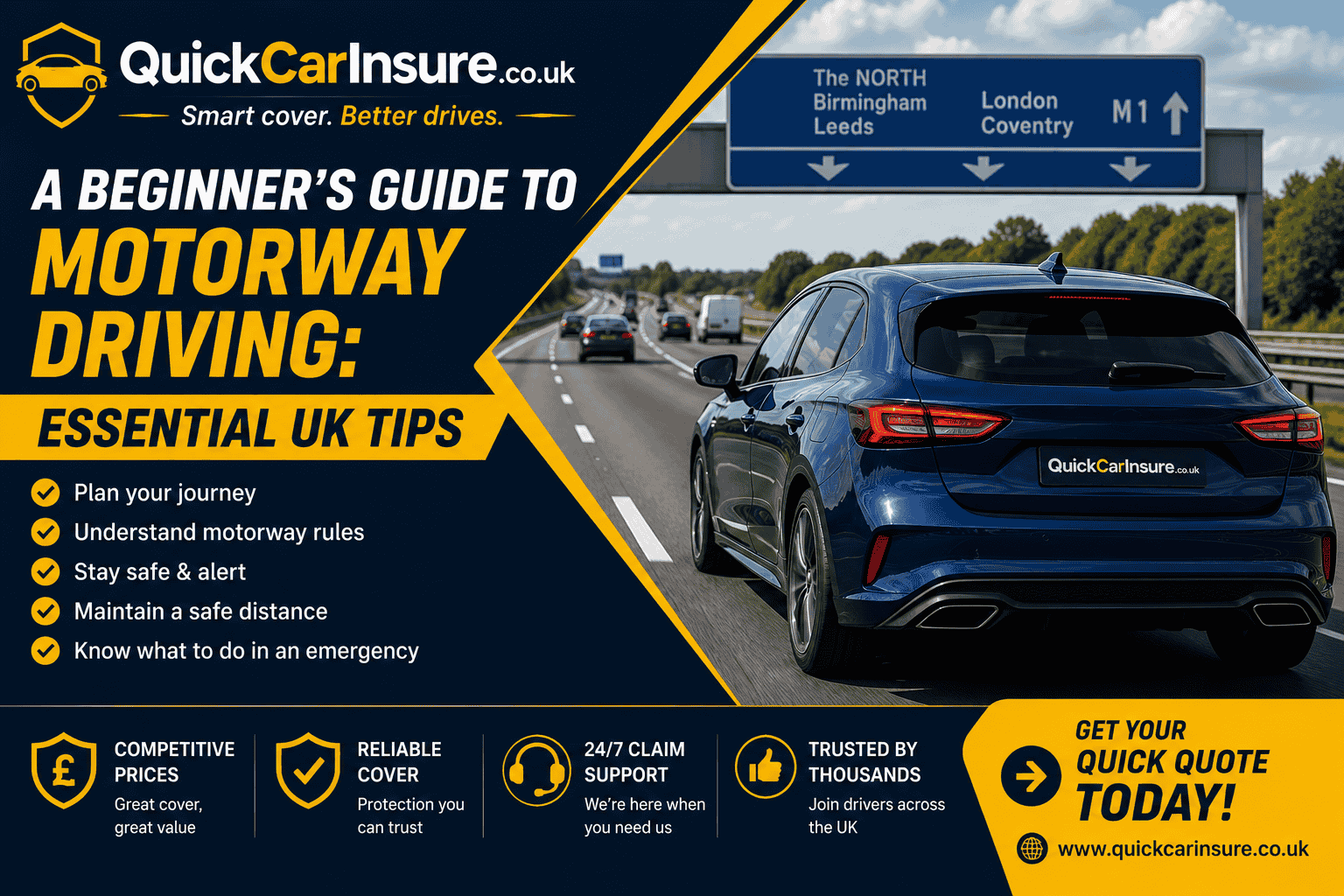
A Beginner’s Guide to Motorway Driving: Essential UK Tips
Passing your driving test is a major milestone. It gives you the freedom to travel where you want, when you want, without relying on public transport or lifts from friends and family. However, for many newly qualified drivers, motorway driving can feel intimidating.
The higher speeds, multiple lanes, and heavier traffic can seem overwhelming at first. The good news is that motorways are actually among the safest roads in the UK when used correctly. With the right knowledge and preparation, you can quickly build confidence and enjoy stress-free motorway journeys.
At QuickCarInsure.co.uk, we understand that new drivers often have concerns about motorway driving. This guide covers everything you need to know before your first motorway trip.
Why New Drivers Feel Nervous About Motorways
Many drivers pass their test without spending much time on motorways. As a result, their first motorway experience often happens independently after passing.
Common concerns include:
- Joining fast-moving traffic
- Changing lanes safely
- Understanding motorway signs
- Driving at higher speeds
- Navigating smart motorways
- Dealing with breakdowns
Fortunately, confidence comes with practice and preparation.
How to Join a Motorway Safely
The first challenge on any motorway journey is joining the traffic flow.
Use the Slip Road Correctly
When entering the motorway:
- Use the slip road to build speed
- Check mirrors frequently
- Signal clearly
- Match the speed of motorway traffic
- Look for a safe gap before merging
Avoid stopping at the end of a slip road unless absolutely necessary, as this can create dangerous situations.
Understanding Motorway Lanes
Knowing which lane to use is one of the most important motorway skills.
Left Lane
The left-hand lane should be your default position.
Use it when:
- Travelling normally
- Not overtaking
- Traffic conditions allow
Middle Lane
The middle lane should only be used for overtaking slower vehicles.
Right Lane
The right-hand lane is generally reserved for overtaking and should not be used for prolonged driving.
Once you've completed an overtake, return safely to the left lane when possible.
Avoid Middle Lane Hogging
One of the most common motorway mistakes is staying unnecessarily in the middle lane.
This can:
- Cause congestion
- Frustrate other drivers
- Lead to penalties for careless driving
Always move back to the left lane when it is safe to do so.
Always Overtake on the Right
UK motorway rules require drivers to overtake on the right-hand side.
Undertaking (passing on the left) should generally be avoided except in slow-moving traffic where lanes are moving at different speeds.
Safe overtaking involves:
- Checking mirrors
- Signalling
- Moving smoothly into the overtaking lane
- Passing safely
- Returning to the left lane when clear
Understanding Motorway Speed Limits
The national speed limit on UK motorways is generally:
70mph
However, drivers should always:
- Adjust speed for weather conditions
- Follow temporary speed restrictions
- Maintain safe stopping distances
Remember that 70mph is the maximum limit, not a target.
Follow the Two-Second Rule
Maintaining a safe distance is crucial on motorways.
A simple method is the two-second rule:
- Pick a fixed object ahead
- Wait for the vehicle in front to pass it
- Count two seconds
- You should not pass the object before finishing the count
In wet or icy conditions, increase this gap significantly.
Understanding Smart Motorways
Many UK motorways now use smart motorway technology.
Smart motorways help manage traffic through:
- Variable speed limits
- Electronic warning signs
- Controlled lane management
- Emergency refuge areas
What Does a Red X Mean?
A red X above a lane means:
❌ The lane is closed
Never drive in a lane displaying a red X.
Ignoring this sign can result in:
- Fines
- Penalty points
- Serious safety risks
Understanding Motorway Signs
Motorway signs are designed to provide clear information.
Blue Signs
Blue motorway signs indicate:
- Directions
- Junction information
- Route numbers
- Service areas
Electronic Signs
Overhead electronic signs may display:
- Speed limits
- Lane closures
- Traffic warnings
- Incident information
Always follow the instructions displayed.
Driver Location Signs
Along UK motorways you'll notice small blue location signs placed regularly.
These signs provide:
- Motorway identification
- Direction of travel
- Exact location reference
If you need emergency assistance, providing this information helps emergency services locate you quickly.
What to Do If You Break Down on a Motorway
Breakdowns can happen unexpectedly.
If your vehicle develops a problem:
Try to Leave the Motorway
If possible:
- Exit at the next junction
- Reach a service area
- Find a safer location
Use the Hard Shoulder or Emergency Area
If you cannot leave the motorway:
- Pull over safely
- Switch on hazard lights
- Turn wheels away from traffic
- Exit through the passenger side if safe
- Move behind the safety barrier
Call for Assistance
Use:
- Emergency roadside phones
- Mobile phone assistance services
- Emergency services if necessary
Never attempt repairs near live traffic.
Tips for Building Motorway Confidence
If you're nervous about motorway driving, these tips can help:
Start During Quiet Periods
Choose:
- Weekday mornings
- Non-peak travel times
- Good weather conditions
Plan Your Route
Knowing your journey beforehand reduces stress.
Use:
- Sat Nav
- Route planners
- Journey apps
Drive with an Experienced Passenger
Having a confident driver alongside you can provide reassurance and practical advice.
Stay Calm
Focus on:
- Smooth steering
- Mirror checks
- Safe distances
- Lane discipline
Confidence develops naturally through experience.
Quick Motorway Driving Checklist
Before your motorway journey:
✅ Check fuel levels
✅ Inspect tyres
✅ Plan your route
✅ Set your navigation before driving
✅ Ensure mirrors are adjusted
✅ Stay alert and focused
Key Motorway Driving Tips for Beginners
- Match traffic speed when joining
- Use the left lane whenever possible
- Overtake only on the right
- Follow the 70mph speed limit
- Avoid middle-lane hogging
- Respect smart motorway signs
- Keep a safe following distance
- Know what to do in a breakdown situation
Final Thoughts
Motorway driving may feel intimidating at first, but it quickly becomes second nature with experience. By understanding lane discipline, speed limits, motorway signs, and breakdown procedures, you'll be well-prepared for safe and confident journeys.
At QuickCarInsure.co.uk, we're committed to helping UK drivers stay safe on the road. Whether you're a newly qualified driver or looking for flexible temporary insurance cover, we're here to support your driving journey every step of the way.