Published on August 29, 2026
Car Insurance Excess Guide & FAQ | Quick Car Insure
Experiencing a car accident is inherently stressful, but having clear, dependable insurance coverage minimizes both financial burdens and administrative headaches. When taking out a policy, one crucial element you will encounter is the policy excess.
Whether securing annual coverage or taking out short-term vehicle insurance to borrow a car, understanding how compulsory and voluntary excess amounts work ensures you aren't caught off guard during a claim.
At Quickcarinsure.co.uk, we break down everything you need to know about policy excess, how it affects your premiums, and how our temporary cover keeps claim costs manageable.
What Is Car Insurance Excess and How Does It Work?
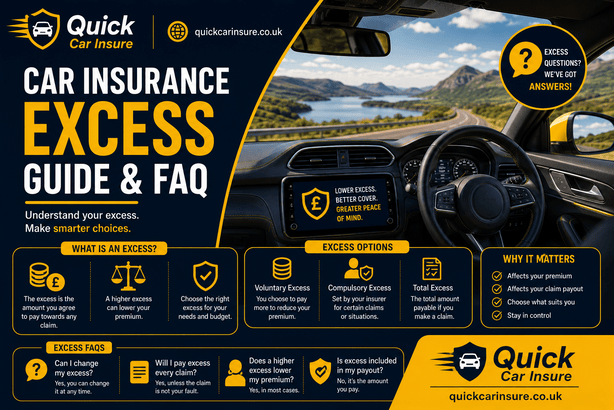
In simple terms, car insurance excess is the agreed amount of money you must contribute toward repairs or settlement costs when you make a claim on your policy.
For example, if your total repair bill comes to £1,500 and your combined policy excess is £300, your insurer covers the remaining £1,200.
Compulsory Excess vs. Voluntary Excess
Insurance policies combine two distinct types of excess that make up your total payable amount during a claim:
1. Compulsory Excess
This is a fixed figure calculated directly by the insurer based on risk factors:
-
Driver Age & Experience: Young drivers (under 25) or newly licensed motorists are assigned higher compulsory excess levels.
-
Vehicle Type: High-performance, luxury, or high insurance group cars carry higher compulsory figures.
2. Voluntary Excess
This is an optional amount you choose to add on top of your compulsory excess:
-
Choosing a higher voluntary excess lowers your upfront insurance quote because you agree to take on more financial responsibility during a claim.
-
Choosing a lower or zero voluntary excess keeps your out-of-pocket costs minimal if an accident happens, though your base quote may be slightly higher.
Why Do Insurers Require Policy Excess?
Insurance excess serves two primary purposes:
-
Prevents Minor/Frivolous Claims: It stops drivers from claiming for trivial scratches or minor damage that costs less than the excess itself, keeping processing costs down for everyone.
-
Encourages Safer Driving: Having financial participation in a claim encourages policyholders to take greater care on the road, protecting their No Claims Bonus (NCD) and keeping UK roads safer.
Clear & Flexible Excess with Quickcarinsure.co.uk
Does short-term insurance include excess? Yes, but Quickcarinsure.co.uk keeps policy terms transparent and easy to understand before you buy.
Frequently Asked Questions (FAQs)
Do I have to pay excess if an accident wasn't my fault?
Initially, you may need to pay your excess to initiate repairs. However, once your insurer successfully recovers all costs from the at-fault driver's insurance provider, your excess is fully reimbursed.
Is it better to select a high or low voluntary excess?
It depends on your personal financial situation. While a high voluntary excess lowers your initial policy price, you must be confident you can pay the combined excess out of pocket if you ever need to claim.
Can I protect my excess on temporary insurance?
Yes! When booking temporary cover with Quickcarinsure.co.uk, you can select optional Excess Protection, which helps reimburse up to £500 of your compulsory excess in the event of a covered claim.
Need clear, reliable temporary car insurance? Visit Quickcarinsure.co.uk today for an instant quote in under 90 seconds!