Published on June 26, 2026
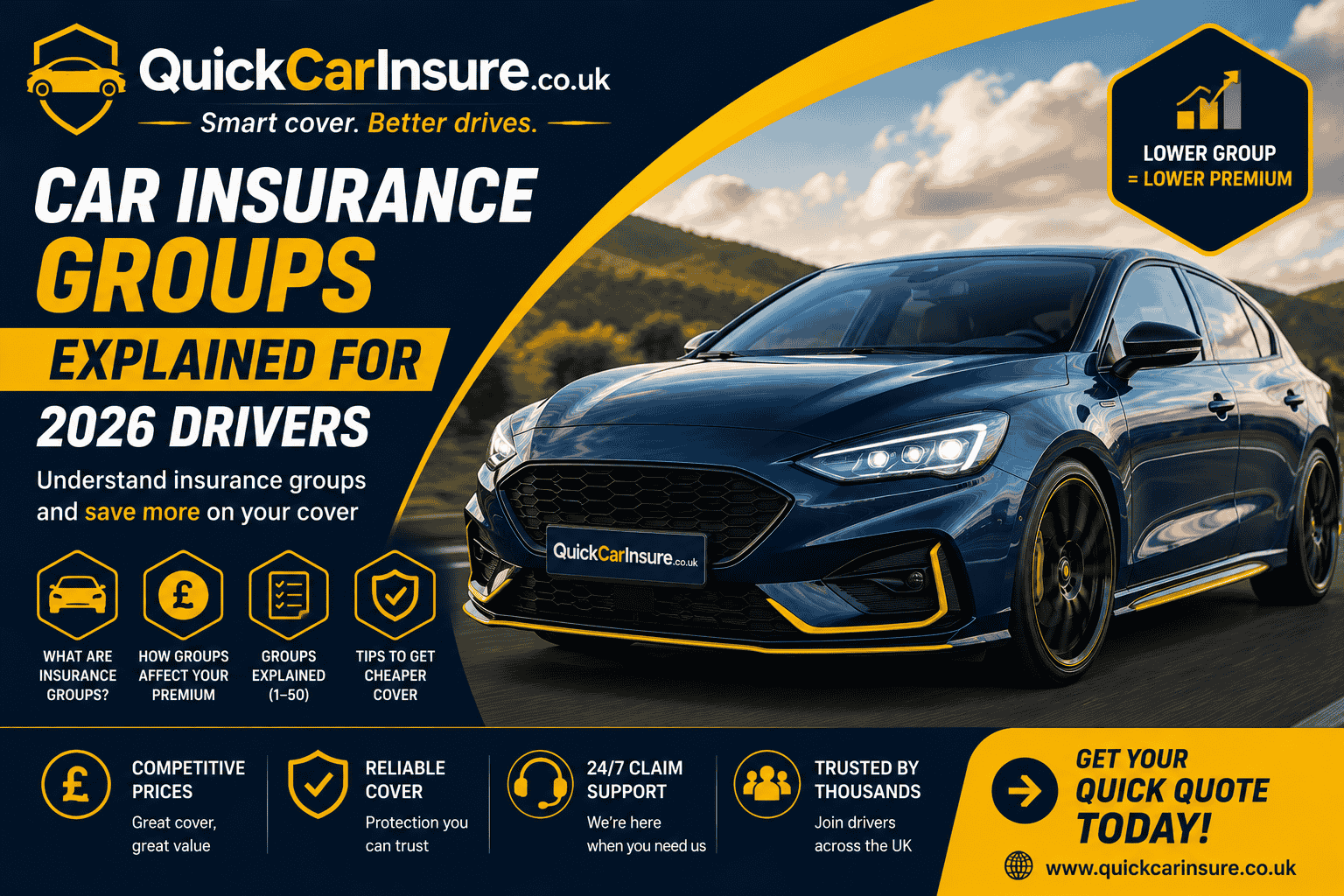
Car Insurance Groups Explained for 2026 Drivers
Buying a new car involves more than comparing prices, fuel economy, and performance. One of the biggest ongoing costs is insurance, and understanding car insurance groups can help you make a smarter financial decision.
At QuickCarInsure.co.uk, we believe informed drivers make better choices. This guide explains how insurance groups work, what influences them, and how they can affect the amount you pay for car insurance.
What Are Car Insurance Groups?
Every car sold in the UK is placed into an insurance group ranging from 1 to 50.
-
Group 1 vehicles are usually the cheapest to insure.
-
Group 50 vehicles are generally the most expensive.
Insurance providers use these groups as one factor when calculating premiums. Cars with lower repair costs, smaller engines, and better safety features usually fall into lower groups, while luxury, sports, and high-performance vehicles are often placed in higher groups.
Why Insurance Groups Matter
Insurance groups help insurers estimate the overall risk of covering a particular vehicle.
A vehicle in a lower insurance group is typically:
-
Less expensive to repair
-
Fitted with smaller engines
-
Less likely to be stolen
-
Equipped with strong safety features
-
Cheaper to replace
Higher-group vehicles often have greater performance, higher values, and more expensive replacement parts, increasing insurance costs.
What Determines a Car's Insurance Group?
Several factors influence where a vehicle is placed.
Vehicle Value
More expensive vehicles generally cost more to repair or replace after an accident.
Repair Costs
Manufacturers provide information about replacement parts and average repair costs. Vehicles that require expensive components usually receive higher insurance ratings.
Repair Time
The longer a vehicle takes to repair, the greater the labour costs, which can increase insurance premiums.
Engine Performance
Cars with higher acceleration and top speeds usually present greater insurance risk.
Safety Technology
Modern safety systems such as autonomous emergency braking, collision avoidance technology, and advanced driver assistance systems may help reduce insurance costs.
Security Features
Factory-installed alarms, immobilisers, secure locking systems, and vehicle tracking technology can all improve a vehicle's insurance rating.
Which Insurance Groups Are Cheapest?
Drivers looking to minimise insurance costs often choose vehicles within Groups 1 to 10.
Popular low-insurance vehicles typically include:
-
Small city cars
-
Compact hatchbacks
-
Low-powered petrol models
-
Economical family cars
These vehicles generally cost less to buy, maintain, and repair.
How to Check Your Car's Insurance Group
Before purchasing a vehicle, it's worth checking its insurance group.
You can usually search by:
-
Registration number
-
Manufacturer
-
Model
-
Engine size
-
Year of manufacture
-
Vehicle specification
Knowing the insurance group beforehand helps you estimate your future running costs.
Other Factors That Affect Your Insurance Premium
Insurance groups are important, but they aren't the only factor insurers consider.
Other elements include:
Driver Age
Newly qualified and younger drivers often pay higher premiums because they have less driving experience.
Driving Record
Previous claims, penalty points, and motoring convictions can increase insurance costs.
Annual Mileage
Drivers covering fewer miles each year generally present a lower insurance risk.
Postcode
Where your vehicle is kept overnight can affect premiums due to local accident and theft statistics.
Occupation
Some professions are statistically associated with higher insurance claims than others.
Vehicle Modifications
Performance upgrades, cosmetic modifications, and aftermarket accessories may increase insurance costs.
Tips to Reduce Your Insurance Costs
If you're looking to save money, consider these practical steps:
-
Choose a vehicle in a lower insurance group.
-
Park your vehicle in a secure garage whenever possible.
-
Install approved security devices.
-
Build a no-claims discount.
-
Avoid unnecessary vehicle modifications.
-
Drive carefully and maintain a clean licence.
-
Compare insurance options before purchasing cover.
Small savings across several areas can make a noticeable difference over time.
Temporary Insurance for Test Drives and Short-Term Cover
If you're buying a new vehicle, arranging a test drive often requires suitable insurance.
QuickCarInsure.co.uk helps drivers explore flexible temporary insurance solutions for situations such as:
-
Test driving a vehicle
-
Borrowing a friend's or family member's car
-
Sharing driving responsibilities
-
Short-term vehicle use
-
Weekend trips and holidays
Temporary cover allows drivers to arrange insurance only for the period they need, making it a practical option for many situations.
Why Choose QuickCarInsure.co.uk?
At QuickCarInsure.co.uk, we understand that every driver's needs are different.
Whether you're purchasing your first car, upgrading to a newer model, or simply looking for temporary insurance, we help drivers find flexible insurance options designed around real-life driving needs.
Final Thoughts
Understanding car insurance groups can help you choose a vehicle that fits both your lifestyle and your budget.
While insurance groups are only one part of calculating your premium, selecting a lower-risk vehicle combined with safe driving habits can lead to significant long-term savings.
Before purchasing your next vehicle, compare insurance costs carefully and explore flexible cover options with QuickCarInsure.co.uk to help make your driving experience more affordable and convenient.