Published on June 23, 2026
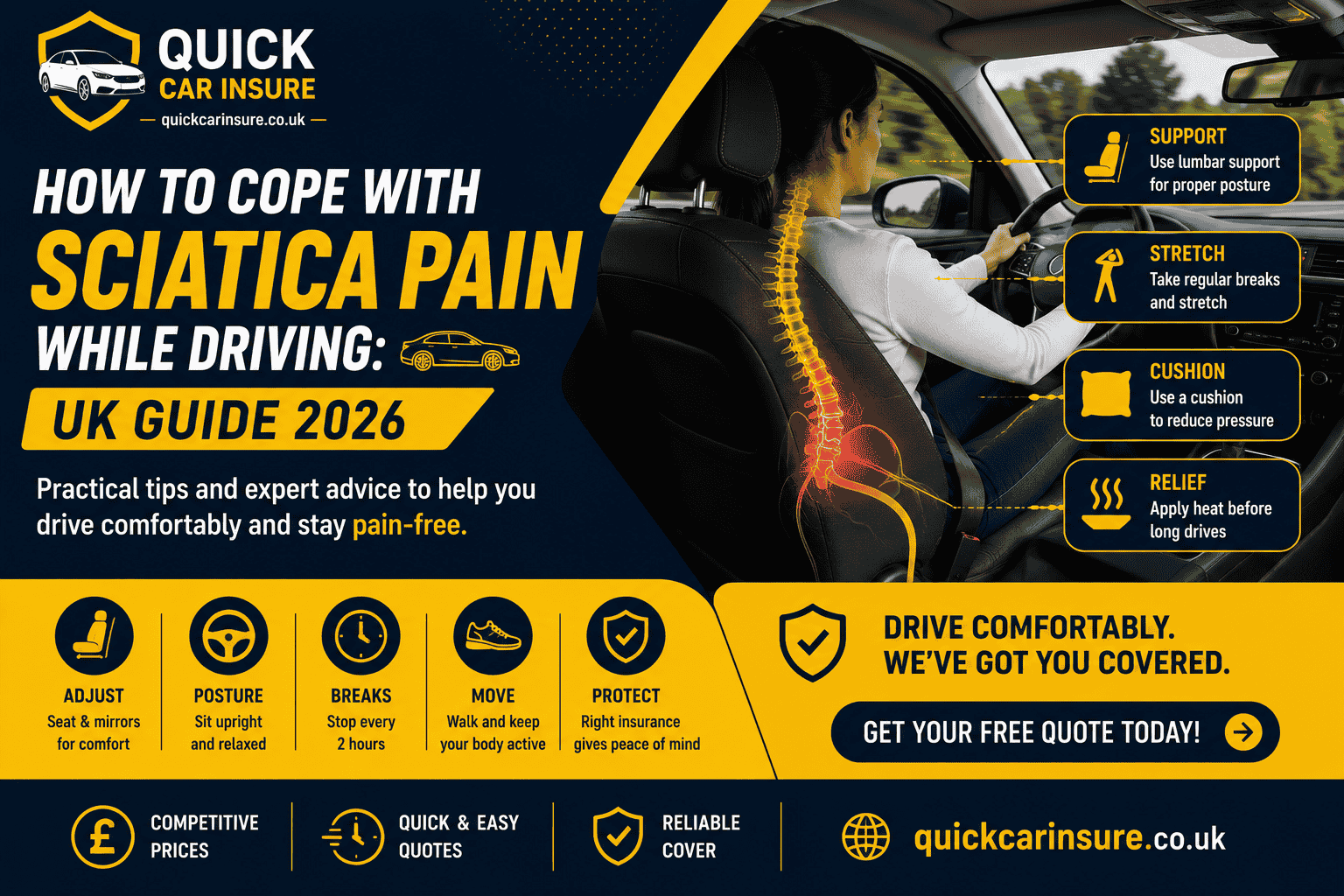
How to Cope with Sciatica Pain While Driving: UK Guide 2026
Sciatica can make even a short car journey feel uncomfortable. The condition typically causes pain that travels from the lower back through the hips and down one leg, making it difficult to sit for long periods. For drivers who regularly commute, travel for work, or simply need to stay mobile, sciatica can be a real challenge.
Fortunately, there are several ways to reduce discomfort and make driving more manageable. Whether you're planning a long-distance journey or using temporary car insurance from QuickCarInsure.co.uk for a short trip, these practical tips can help you stay comfortable behind the wheel.
What Is Sciatica and Why Does Driving Make It Worse?
Sciatica occurs when the sciatic nerve becomes irritated or compressed. Symptoms often include:
- Lower back pain
- Tingling or numbness in the leg
- Burning sensations
- Weakness in the affected leg
- Pain that worsens when sitting
Because driving requires prolonged sitting, it can place additional pressure on the lower back and sciatic nerve, increasing discomfort.
Use Proper Lumbar Support
One of the simplest ways to reduce sciatica pain while driving is by improving lower back support.
Many modern vehicles include adjustable lumbar support, but if your car doesn't, consider:
- Lumbar support cushions
- Orthopaedic seat cushions
- Memory foam backrests
- Ergonomic driving seat accessories
These products help maintain the natural curve of your spine and reduce pressure on sensitive nerves.
Adjust Your Driving Position Correctly
Your seating position plays a huge role in managing sciatica symptoms.
Follow these guidelines:
Keep Your Knees Level With Your Hips
Your hips should sit slightly higher than your knees to reduce strain on your lower back.
Sit Close Enough to the Pedals
Avoid stretching your legs too far forward. Adjust the seat so your knees remain slightly bent while operating the pedals.
Recline the Seat Slightly
Experts often recommend a seat angle of around 100–110 degrees to reduce spinal compression.
Keep Both Shoulders Supported
Your back should remain in contact with the seat at all times without leaning forward.
Avoid Hunching Over the Steering Wheel
Many drivers unknowingly lean forward while driving, especially during longer journeys.
Poor posture can:
- Increase pressure on spinal discs
- Irritate the sciatic nerve
- Cause muscle fatigue
- Lead to additional neck and shoulder pain
Instead, sit upright with your shoulders relaxed and your head aligned over your spine.
Take Extra Care Getting In and Out of the Car
For many sciatica sufferers, entering and exiting the vehicle can be just as painful as driving itself.
To minimise discomfort:
- Sit on the edge of the seat first.
- Keep your back straight.
- Rotate your whole body together.
- Swing both legs in or out simultaneously.
- Use your arms to support your movement.
Avoid sudden twisting motions that can aggravate your lower back.
Plan Regular Driving Breaks
Remaining seated for extended periods can worsen sciatica symptoms.
For longer journeys:
- Stop every 1–2 hours
- Walk around for a few minutes
- Perform gentle stretches
- Stay hydrated
- Change positions frequently
Even a short break can help improve circulation and reduce nerve irritation.
Stretch Before and After Driving
Stretching can improve flexibility and help relieve tension around the sciatic nerve.
Useful stretches include:
- Knee-to-chest stretch
- Piriformis stretch
- Seated spinal stretch
- Hamstring stretch
- Cat-cow stretch
Always consult a healthcare professional before beginning any new exercise routine, especially if your symptoms are severe.
Use Heat Therapy for Extra Comfort
Heat can help relax tight muscles and improve blood flow.
Consider using:
- Heated car seats
- Portable heat pads
- Electric back warmers
- Reusable heat packs
Applying gentle heat before or after driving may help reduce stiffness and discomfort.
Choose the Right Vehicle
Not every car is equally comfortable for drivers with back problems.
When choosing a vehicle, look for:
Easy Entry and Exit
SUVs and crossover vehicles often have a higher seating position, making them easier to access.
Adjustable Seats
Multiple seat adjustment options help you find the most comfortable driving position.
Heated Seats
Heat therapy built directly into the seat can provide added relief.
Smooth Suspension
A vehicle with a comfortable ride helps reduce jolts and vibrations that may aggravate sciatica.
Stay Active Outside the Car
Managing sciatica isn't just about what happens behind the wheel.
Regular activities such as:
- Walking
- Swimming
- Yoga
- Physiotherapist-recommended exercises
can strengthen supporting muscles and improve overall mobility.
Consider Flexible Insurance for Occasional Driving
If sciatica limits how often you drive, a short-term insurance policy may be a practical option.
At QuickCarInsure.co.uk, drivers can explore flexible temporary car insurance solutions designed for short-term vehicle use, helping you stay insured only when you need to be on the road.
Signs You Should Seek Medical Advice
Contact a healthcare professional if you experience:
- Severe or worsening pain
- Loss of bladder or bowel control
- Significant weakness in your leg
- Persistent numbness
- Symptoms that do not improve
Early treatment can often prevent the condition from becoming more serious.
Final Thoughts
Driving with sciatica can be uncomfortable, but the right adjustments can make a significant difference. By improving your seating position, using proper support, planning regular breaks, and choosing a suitable vehicle, you can reduce discomfort and enjoy safer journeys.
Whether you're taking a short trip or planning a longer drive, preparing properly can help you stay comfortable on the road. For flexible driving cover and useful motoring advice, visit QuickCarInsure.co.uk.