Published on September 2, 2026
How to Drive an Automatic Car | QuickCarInsure.co.uk
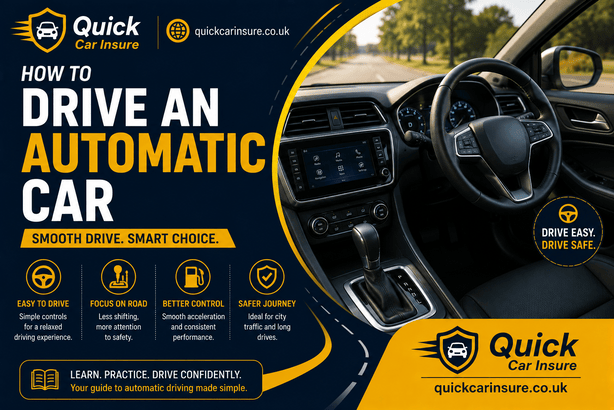
Mastering Automatic Driving: Essential Tips for First-Timers
Transitioning to an automatic transmission or driving one for the very first time is far simpler than mastering a manual gearshift. Modern automatic vehicles have become increasingly popular on UK roads due to their convenience, smooth acceleration, and stress-free operation in heavy traffic.
Whether you are buying your first vehicle or using short-term cover from QuickCarInsure.co.uk to borrow a friend's or relative's automatic car, these fundamental guidelines will help you feel completely confident behind the wheel.
Understanding the Automatic Gear Selector
Before turning the ignition, spend a few minutes getting familiar with the shift controls. Automatic gearboxes typically feature four standard positions:
-
Drive (D): Used for forward travel. The vehicle automatically manages gear selection as your speed increases or decreases.
-
Park (P): Locks the transmission so the wheels cannot rotate. Always select Park before turning off the engine or starting up.
-
Reverse (R): Operates identically to manual reverse, allowing the vehicle to move backward.
-
Neutral (N): Disengages the engine from the wheels. Use Neutral alongside the handbrake during extended stops at traffic lights.
Essential Tips for Smooth Automatic Driving
-
Rest Your Left Foot: Since automatic vehicles do not have a clutch pedal, keep your left foot tucked back firmly. Use only your right foot to operate both the accelerator and brake pedals to avoid accidental dual-pedal pressing.
-
Mastering the 'Creep' Function: When you release the footbrake while in Drive or Reverse, the car will naturally move forward or backward slowly at idle speed. This function is ideal for tight parking maneuvers and slow-moving queues.
-
Starting and Stopping: To start the engine, press down firmly on the brake pedal, turn the ignition, press the release safety catch on the gear selector, and move the lever into Drive. When stopping, bring the vehicle to a full standstill, engage Park, apply the handbrake, and turn off the engine.
Understanding Automatic Gearbox Variants
-
Conventional Automatics: Utilize a torque converter rather than a traditional clutch system to deliver smooth gear transitions.
-
Dual-Clutch Transmission (DSG): Uses twin automated clutches to pre-select upcoming gear changes for rapid, seamless shifting.
-
Continuously Variable Transmission (CVT): Common in hybrid cars, CVTs use a continuous belt system to deliver constant power without distinct gear shifts.
Frequently Asked Questions
-
Is it easier to learn in an automatic car?
Yes, most drivers adapt quickly because there is no clutch control or gear stalling to manage.
-
Should you use the handbrake in an automatic?
Yes, always engage the handbrake when parked or resting during prolonged traffic delays.
-
Do you use both feet when driving an automatic?
No, you should strictly use your right foot to manage the accelerator and brake pedals.
Before setting off in an unfamiliar vehicle, ensure you are properly protected on the road. Flexible temporary car insurance from QuickCarInsure.co.uk can be arranged online in under two minutes, giving you instant comprehensive cover whenever you need to borrow a car.