Published on June 27, 2026
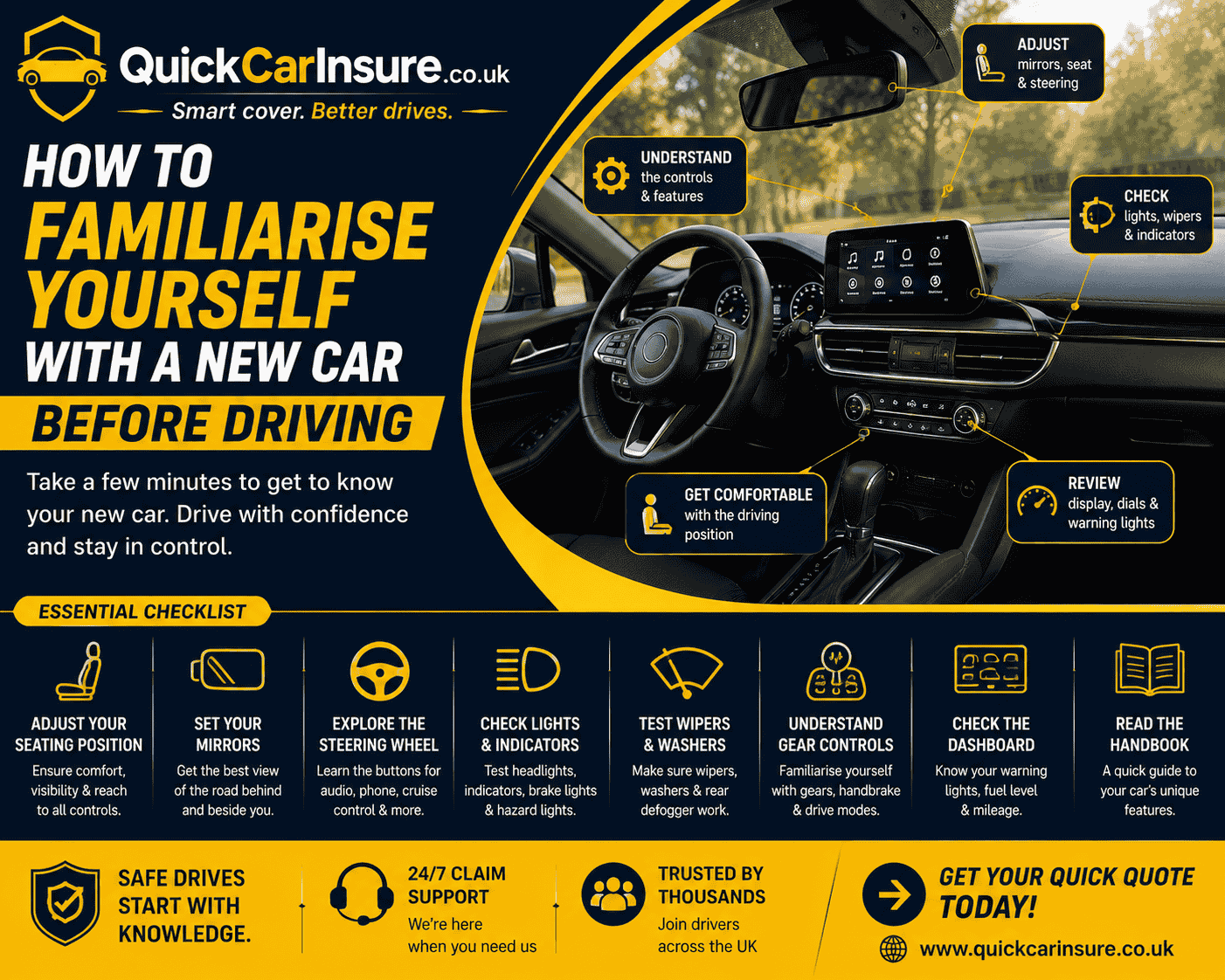
How to Familiarise Yourself with a New Car Before Driving
Driving a new car for the first time can feel exciting, but it can also be challenging. Whether you've just purchased a new vehicle, borrowed a friend's car, hired a rental vehicle, or are taking a test drive, every car has its own controls, handling, and driving characteristics.
Taking a few minutes to understand your new vehicle before setting off can improve your confidence, increase road safety, and reduce the risk of accidents.
At QuickCarInsure.co.uk, we know that many drivers regularly borrow vehicles, take test drives, or share driving responsibilities. That's why we've created this practical guide to help you become familiar with any new car before heading onto busy UK roads.
Read the Vehicle Handbook
Every vehicle comes with an owner's manual containing valuable information about its features and controls.
Before driving, spend a few minutes checking:
- Dashboard warning lights
- Fuel type requirements
- Bonnet and fuel cap release
- Lights and indicator controls
- Windscreen washer operation
- Tyre pressure recommendations
- Basic maintenance information
Even experienced drivers can benefit from reviewing the manual, especially when driving an unfamiliar model.
Adjust Your Driving Position
Comfort and visibility play a major role in safe driving.
Before starting the engine, adjust:
- Driver's seat position
- Steering wheel height and reach
- Head restraint
- Seatbelt
- Lumbar support (if available)
Your knees should remain slightly bent when pressing the pedals, while your arms should comfortably reach the steering wheel without stretching.
A correct seating position helps reduce fatigue during long journeys.
Set Your Mirrors Correctly
Properly adjusted mirrors eliminate blind spots and improve awareness.
Take time to adjust:
- Rear-view mirror
- Driver-side mirror
- Passenger-side mirror
Ensure you have a clear view behind the vehicle without needing to move your head excessively.
Good visibility makes changing lanes and parking much easier.
Learn Where the Controls Are
Every manufacturer positions controls differently.
Before driving, locate:
- Headlights
- Indicators
- Hazard lights
- Windscreen wipers
- Screen wash controls
- Climate controls
- Heated windows
- Horn
- Parking brake
Knowing where these controls are allows you to operate them safely without taking your eyes off the road.
Understand the Vehicle's Size
If you're moving from a small hatchback to an SUV, estate, or van, you'll immediately notice differences in visibility and handling.
Take note of:
- Vehicle width
- Overall length
- Height restrictions
- Turning circle
- Rear visibility
Understanding the car's dimensions helps when:
- Parking
- Driving through narrow roads
- Overtaking
- Entering car parks
Get Used to the Pedals
Different vehicles respond differently.
Manual cars may have:
- Different clutch biting points
- More powerful acceleration
- Sharper braking
Automatic vehicles may also feel very different if you're used to driving manual.
Practise smooth acceleration and braking in a quiet area before joining busy roads.
Explore the Technology
Modern vehicles include many advanced features.
Spend a few minutes learning how to use:
- Satellite navigation
- Bluetooth connectivity
- Apple CarPlay or Android Auto
- Cruise control
- Parking sensors
- Reversing cameras
- Lane assist
- Adaptive cruise control
Setting these systems up before driving reduces distractions later.
Practise Parking Manoeuvres
Every vehicle handles differently during slow-speed manoeuvres.
Practice in an empty car park before driving on public roads.
Focus on:
- Reverse parking
- Bay parking
- Parallel parking
- Three-point turns
- Reversing safely
Building confidence early makes everyday driving much easier.
Start with Quiet Roads
Rather than immediately driving on motorways or busy city streets, begin on quieter local roads.
This gives you time to become familiar with:
- Steering response
- Brake sensitivity
- Gear changes
- Acceleration
- Visibility
As your confidence grows, gradually move onto faster roads and dual carriageways.
Stay Calm and Avoid Distractions
Driving an unfamiliar vehicle naturally requires more concentration.
Before setting off:
- Silence unnecessary notifications
- Set your sat-nav in advance
- Choose your music before driving
- Avoid adjusting settings while moving
Remaining focused helps you adapt more quickly to your new vehicle.
Borrowing a Car? Make Sure You're Properly Insured
Many drivers assume they're automatically covered to drive someone else's vehicle, but this isn't always the case.
Whether you're:
- Borrowing a family member's car
- Taking a test drive
- Sharing driving duties on a road trip
- Driving a friend's vehicle
it's important to have the correct insurance before getting behind the wheel.
QuickCarInsure.co.uk offers flexible temporary car insurance designed for short-term driving needs. Whether you need cover for a few hours, a day, or several weeks, temporary insurance provides a convenient solution without affecting the owner's existing policy in many cases.
Final Thoughts
Getting familiar with a new car doesn't take long, but it can make a significant difference to your confidence and safety.
By adjusting your seating position, checking the controls, understanding the vehicle's size, practising basic manoeuvres, and ensuring you have the right insurance, you'll enjoy a safer and more relaxed driving experience.
If you're borrowing a vehicle or taking a test drive, QuickCarInsure.co.uk can help you arrange flexible temporary car insurance, giving you peace of mind every time you get behind the wheel.
Drive confidently, stay protected, and enjoy every journey with QuickCarInsure.co.uk.