Published on June 26, 2026
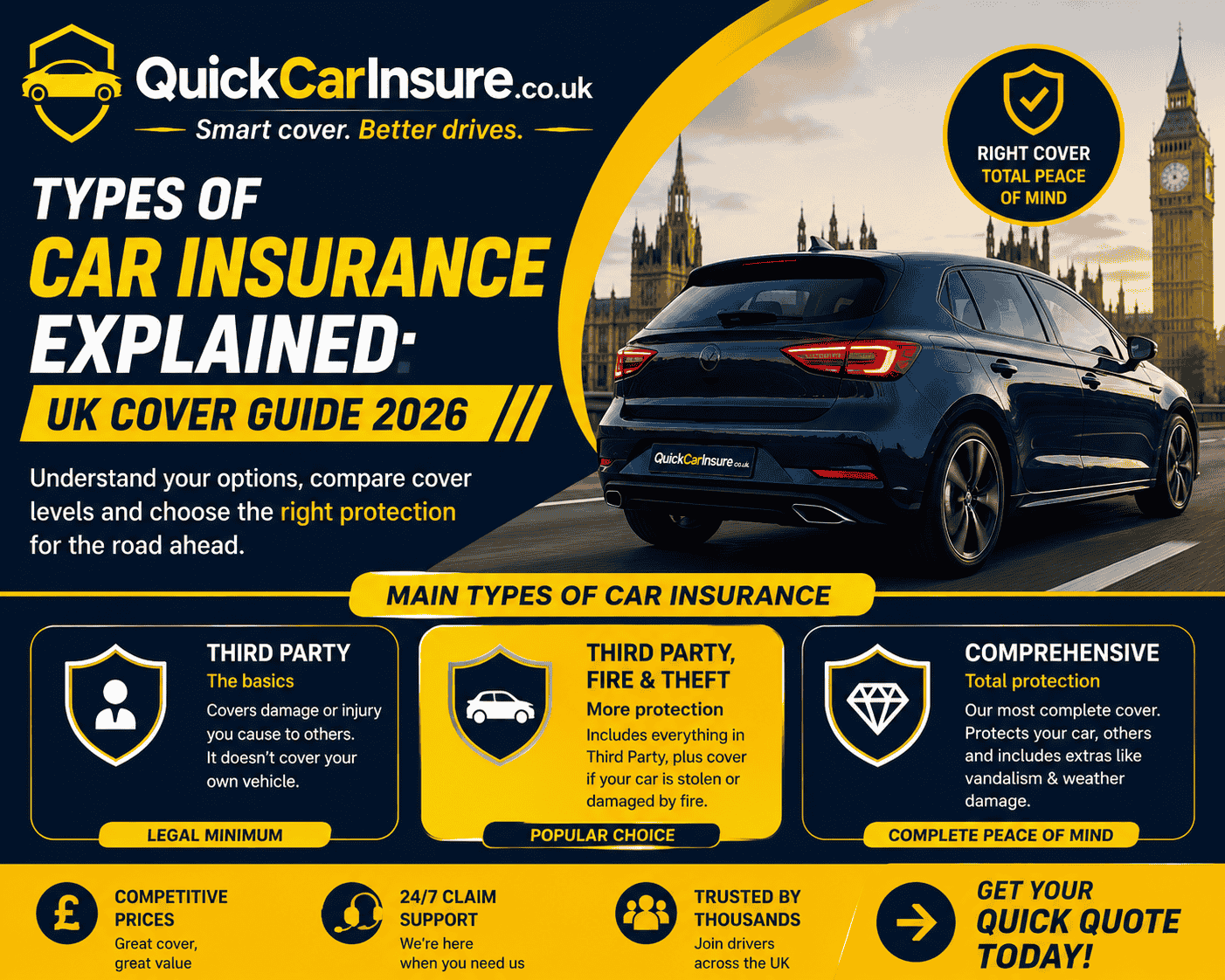
Types of Car Insurance Explained: UK Cover Guide 2026
Whether you're a new driver, purchasing your first car, or simply reviewing your current policy, understanding the different types of car insurance is essential. Choosing the right level of cover not only keeps you legally protected but also helps you avoid unexpected expenses if something goes wrong.
At QuickCarInsure.co.uk, we know that every driver has different insurance needs. That's why understanding the available options can help you make a smarter decision while ensuring you only pay for the protection you actually need.
Why Car Insurance Matters
Driving without valid insurance in the UK is illegal. If you're caught driving uninsured, you could face:
- Fixed penalty fines
- Penalty points on your driving licence
- Vehicle seizure
- Increased future insurance premiums
- Potential court prosecution
Having the right insurance protects both you and other road users while providing financial peace of mind.
The Three Main Types of Car Insurance
There are three primary levels of car insurance available in the UK.
1. Third-Party Car Insurance
Third-party insurance is the minimum legal requirement for driving on UK roads.
This policy covers damage or injuries caused to other people, their vehicles, or their property if you are responsible for an accident.
Typically, third-party insurance covers:
- Damage to another person's vehicle
- Injury compensation for third parties
- Damage to public property
However, it does not cover:
- Damage to your own vehicle
- Theft of your car
- Fire damage to your vehicle
- Your own medical expenses following an at-fault accident
Although it was once the cheapest option, third-party insurance is not always the lowest-priced policy today.
2. Third-Party, Fire and Theft Insurance
This policy includes everything covered by third-party insurance while also protecting your vehicle if it is:
- Stolen
- Damaged by fire
- Attempted theft resulting in damage
It still won't pay for repairs to your own vehicle if you cause an accident, but it provides greater protection than basic third-party cover.
This option is often suitable for drivers who own older vehicles but still want additional security.
3. Comprehensive Car Insurance
Comprehensive insurance offers the highest level of protection available.
It generally includes:
- Damage to your own vehicle
- Damage to third-party vehicles
- Personal injury cover
- Fire damage
- Vehicle theft
- Vandalism
- Windscreen repair or replacement
- Accidental damage
Many comprehensive policies also allow optional extras such as:
- Breakdown assistance
- Courtesy vehicle
- Legal expenses cover
- No Claims Discount protection
- Personal belongings cover
For many drivers, comprehensive insurance often provides better value than expected because insurers sometimes offer competitive pricing despite the wider protection.
Which Type of Insurance Is Right for You?
The best policy depends on several factors, including:
- Your vehicle's value
- How often you drive
- Your budget
- Your driving experience
- Where your car is kept overnight
If your car is relatively new or expensive, comprehensive cover is usually the safest option.
Older vehicles with lower values may be suitable for third-party or third-party fire and theft policies.
Understanding Insurance Usage Classes
Insurance providers also ask how you'll use your vehicle.
The most common usage classes include:
Social, Domestic and Pleasure
Suitable for:
- Shopping
- Visiting friends and family
- Leisure trips
- School runs
- Holidays
Social, Domestic, Pleasure and Commuting
Includes everything above plus travelling to and from a single permanent workplace.
Business Use
Required if you:
- Visit multiple work locations
- Drive between business meetings
- Use your car as part of your job
Always select the correct usage category, as incorrect information could invalidate your insurance.
Insurance for Young and New Drivers
Young drivers generally pay higher premiums because insurers consider them statistically more likely to make a claim.
There are several ways to reduce insurance costs:
- Choose a smaller, lower insurance group vehicle
- Build a No Claims Bonus
- Install a telematics (black box) device
- Add an experienced named driver (where appropriate)
- Complete additional driver training courses
Comparing quotes from multiple insurers can also help reduce costs.
Temporary Car Insurance: A Flexible Alternative
Not everyone needs an annual insurance policy.
Temporary car insurance is ideal if you need to drive for a short period, such as:
- Borrowing a family member's vehicle
- Test driving a car before purchase
- Sharing driving responsibilities on long journeys
- Driving a newly purchased vehicle home
- Cover during emergencies
At QuickCarInsure.co.uk, we specialise in helping drivers find flexible temporary insurance solutions that provide comprehensive cover for exactly the time you need—whether that's a single hour, a day, a week, or longer.
Factors That Affect Your Insurance Premium
Insurance prices aren't based solely on the type of cover you choose.
Providers also consider:
- Your age
- Driving experience
- Postcode
- Annual mileage
- Vehicle type
- Insurance group
- Occupation
- Previous claims history
- Driving convictions
- Security features
Improving these factors where possible may help lower your premium.
Tips for Choosing the Right Policy
Before purchasing car insurance, consider these simple tips:
- Compare several insurance providers
- Read policy exclusions carefully
- Check the voluntary excess amount
- Only add optional extras you genuinely need
- Keep your personal information accurate
- Review your policy before renewing each year
Taking time to compare policies can often save money while providing better protection.
Why Choose QuickCarInsure.co.uk?
At QuickCarInsure.co.uk, we understand that every driver has different requirements.
Whether you need temporary insurance for a few hours, several days, or up to a few weeks, we help drivers find flexible short-term insurance solutions that suit their circumstances without paying for unnecessary annual cover.
Our goal is to make temporary insurance straightforward, affordable, and convenient.
Final Thoughts
Understanding the different types of car insurance helps you make better decisions and ensures you're properly protected whenever you drive.
Whether you choose third-party, third-party fire and theft, comprehensive, or temporary insurance, selecting the right policy based on your driving habits and vehicle can save both money and stress.
If you're looking for flexible short-term cover, QuickCarInsure.co.uk can help you find insurance that fits your journey—whether it's for a single day or several weeks.